
SHARING OF KNOWLEDGE, INSPIRING DISCOVERY
Submit Manuscript Join as Reviewer & Editor
 SAT 09, 2025
Satellites and Earth Exploring Space Technology, Observation, Communication, and Their Role in Modern Life
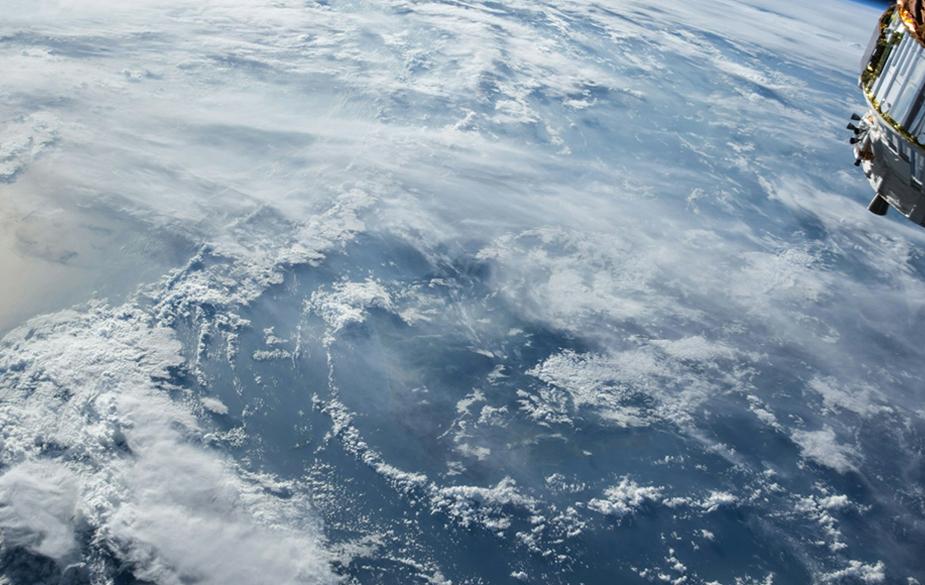
Satellites are artificial objects placed into orbit around Earth to collect data, enable communication, and support scientific research. They play a crucial role in weather prediction, environmental monitoring, navigation, and broadcasting. Modern satellites vary in size and function, from small CubeSats to large geostationary satellites. By continuously observing Earth, they help track climate changes, natural disasters, and human activities, providing vital information for governments, scientists, and industries. Satellites also support global communication networks, GPS systems, and remote sensing.
- Purpose: Observation, communication, navigation, and research.
- Types: Geostationary, polar, low Earth orbit, and CubeSats.
- Applications: Weather forecasting, GPS, broadcasting, and environmental monitoring.
- Benefits: Disaster management, urban planning, and scientific research.
- Challenges: Space debris, cost, and technical limitations.
- Future: Advancements in miniaturization, AI integration, and global connectivity.
Satellites orbit Earth to monitor the planet, support communication, and enable scientific research. They collect data used for weather forecasting, GPS navigation, environmental monitoring, and global communication networks. Modern satellites range from small, low-cost CubeSats to large geostationary satellites. They provide real-time information that helps governments, scientists, and industries make informed decisions about climate, natural disasters, and urban planning. Satellite technology continues to evolve, improving connectivity, remote sensing, and Earth
"Satellites orbiting Earth provide invaluable data for weather forecasting, communication, navigation, and scientific research. Understanding their capabilities and impact allows humanity to monitor our planet, advance technology, and make informed decisions for sustainable development and global connectivity."
observation capabilities. Responsible use of satellites ensures long-term sustainability in space and maximizes their benefits for society, science, and global infrastructure.
Proper understanding of satellite technology enhances disaster management, urban planning, and space exploration while ensuring responsible usage and sustainability in space. Satellites are essential tools for understanding and managing our planet. They provide critical information for tracking weather patterns, monitoring deforestation, observing ocean currents, and measuring air quality. Scientific satellites contribute to space research and exploration, helping humans study other planets and the universe. Communication satellites enable internet access, television broadcasting, and mobile connectivity worldwide. Earth-observing satellites play a key role in disaster response, giving real-time data during floods, hurricanes, and wildfires. With technological advancements, satellites are becoming smaller, more efficient, and capable of delivering higher-resolution data. Responsible deployment and maintenance ensure the sustainability of space activities while maximizing benefits for humanity and the environment.
Share Now: